📢 Loạt tính năng mới: Kết nối tài khoản Diễn Đàn với toàn bộ Thư Viện (Truyện/Thơ/Nhạc/Phim/Ẩm Thực)
Xin chào cả nhà!


Ban quản trị vừa hoàn tất một loạt tính năng mới, kết nối tài khoản Diễn Đàn với toàn bộ các khu vực Truyện, Thơ, Nhạc, Phim và Ẩm Thực. Xin tổng kết lại để mọi người tiện theo dõi và sử dụng:

1. Đăng nhập dùng chung toàn site
Chỉ cần 1 tài khoản Diễn Đàn, đăng nhập một lần là dùng được ở mọi khu vực. Nút "Đăng nhập / Đăng ký" đã thay cho "Giới thiệu / Trợ giúp" cũ ở đầu mỗi trang.

2. Thảo luận ngay dưới tác phẩm
Mỗi truyện, bài thơ, bài hát, phim, món ăn giờ có khung bình luận riêng ngay trên trang đọc/nghe/xem - không cần qua diễn đàn mới góp ý được. Bình luận đầu tiên sẽ tự tạo 1 chủ đề trong mục "💬 Thảo Luận Tác Phẩm Thư Viện" để mọi người cùng trao đổi.

3. Theo dõi tác phẩm
Bấm "🔔 Theo dõi tác phẩm" để nhận thông báo qua email ngay khi truyện có chương mới.

4. Yêu thích & Lịch sử đọc
Đánh dấu "⭐ Yêu thích" các tác phẩm ưng ý, và hệ thống tự ghi lại "🕘 Lịch sử đọc" mỗi khi bạn ghé đọc/nghe/xem - đồng bộ theo tài khoản, xem lại bất cứ lúc nào trong menu thành viên.

5. Huy hiệu hoạt động
Một vài huy hiệu nhỏ (bình luận viên, người theo dõi, người sưu tầm, thành viên kỳ cựu...) sẽ tự xuất hiện trên hồ sơ khi bạn hoạt động tích cực - hoàn toàn không phải hệ thống điểm/tiền thưởng, chỉ mang tính ghi nhận cho vui.

6. Ghi công người đóng góp
Tên người đăng nội dung (đánh máy, sưu tầm...) giờ sẽ tự động liên kết về hồ sơ Diễn Đàn nếu trùng với một tài khoản đang có trên diễn đàn.

7. Báo lỗi nội dung
Phát hiện lỗi chính tả, thiếu nội dung, ảnh hỏng... trong lúc đọc? Bấm "🚩 Báo lỗi nội dung" ngay trên trang, không cần rời khỏi tác phẩm đang xem.

8. Cải thiện giao diện trên điện thoại
Đầu trang và khu vực diễn đàn đã được chỉnh lại cho gọn gàng hơn trên màn hình nhỏ.

Rất mong nhận được góp ý thêm từ cả nhà để hoàn thiện dần. Cảm ơn mọi người đã luôn đồng hành cùng Việt Nam Thư Quán!

Diễn Đàn » English Club

Natural Disasters * North America

208 trả lời, 31.566 lượt xem — Trang 5 / 7
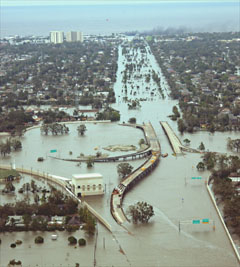
Canadian Press - Wed Aug 31,10:06 AM ET This photo provided by the U.S. Coast Guard shows flooded roadways as the Coast Guard conducted initial hurricane Katrina damage assessment overflights of New Orleans Monday. (AP Photo/U.S. Coast Guard, Petty Officer 2nd Class Kyle Niemi)

📎 aaa
Đăng nhập để trả lời
0
AFP/Getty Images - Wed Aug 31,10:17 AM ET The damaged roof of the Superdome is seen in New Orleans, Louisiana. Rescue crews pushed bodies aside to get to stranded victims of Hurricane Katrina as hundreds were feared dead in a humanitarian crisis that officials warned would deepen as floodwaters continued to rise.(AFP/Getty Images/Dave Einsel)

📎 AD
Đăng nhập để trả lời
0
Mayor: Katrina May Have Killed Thousands

AP - 56 minutes ago

NEW ORLEANS - Hurricane Katrina probably killed thousands of people in New Orleans, the mayor said Wednesday — an estimate that, if accurate, would make the storm the nation's deadliest natural disaster since at least the 1906 San Francisco earthquake. "We know there is a significant number of dead bodies in the water," and other people dead in attics, Mayor Ray Nagin said. Asked how many, he said: "Minimum, hundreds. Most likely, thousands."

http://news.yahoo.com/fc/world/hurricanes_and_tropical_storms
Đăng nhập để trả lời
0
AP - Wed Aug 31, 4:41 PM ET

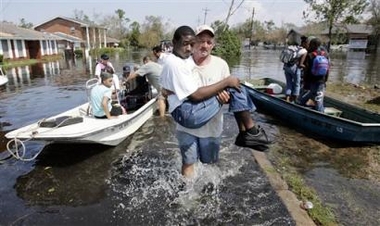
Volunteer Mickey Monceaux carries David Johnson, who could not walk, to safety after he used his boat to rescue Johnson and other residents from a flooded neighborhood on the east side of New Orleans, Wednesday, Aug. 31, 2005. Hurricane Katrina left much of the city under water. Officials called for a mandatory evacuation of the city, but many residents remained in the city and had to be rescued from flooded homes and hotels. (AP Photo/Eric Gay)

📎 AA
Đăng nhập để trả lời
0
Katrina Triggers Memories in Tsunami Zone

By CHRIS BRUMMITT, Associated Press Writer
Wed Aug 31, 1:02 PM ET

BANDA ACEH, Indonesia - For Raju Danny, waking up to images of water surging into New Orleans on the morning news was especially painful. The 26-year-old was tossed around by last year's tsunami and lost his wife to the raging torrents.

"I felt tears welling up when I saw that so many people had died," the waiter said Wednesday during a break from serving rice and fried chicken to customers in this seaside. "I would like to help, but all I have is my prayers."

Though the Dec. 26 earthquake and tsunami was a far more deadly disaster than the one triggered by Hurricane Katrina, people in Asian nations hardest hit by the killer waves — from Indonesia, to Thailand, to Sri Lanka — were shocked by what had happened.

"God has made us equals in birth, life and death," said Nimal Premasiri, 51, who lost his wife and daughter when waves "as big as elephants" crashed into their packed commuter train in Sri Lanka.

Katrina has flooded large parts of New Orleans and several other counties along the Gulf Coast, submerging thousands of houses and killing at least 110, though officials were still tallying the dead and expected the toll to keep climbing.

The tsunami killed or left missing more than 200,000 people, triggering a massive international emergency response and a huge fund-raising drive that saw millions of people worldwide donating money.

People in Indonesia's Aceh province, which lost a staggering 130,000 people, recalled in particular the massive humanitarian effort undertaken by the US military following the disaster.

Within days, US choppers were dropping off water and emergency supplies to stranded villagers, and returning with injured survivors who were taken to hospitals.

"At that time America helped us a lot, and they were genuine too," said Reza Saputra, a 19-year-old student. "One of their helicopters even crashed here."

In Sri Lanka, where the tsunami killed 31,000 and left tens of thousands homeless, several people also said pictures of the devastation caused by Katrina brought back vivid memories.

"When I see the images from Katrina, I can easily identify myself,' said Chulie de Silva, a World Bank executive who lost her brother in the tsunami. "We were just (like) them on Dec. 26. At least they had warning, we had none."

"The lives of men, women, children were snuffed out in a few seconds," she said, recalling the look of agony on people's faces as the waves swept them away and later, the stench of death. "My brother lay on his back, no shirt, his handsome face peaceful."

"I pray and hope not many sisters" in the United States will suffer the way I have, she said.

Many in India, where some 10,700 people died, also felt the pain caused by events unfolding a half a world away, said Barry Mackey, regional program manager in New Delhi for Habitat for Humanity, an international housing charity based in Americus, Georgia.

"The people here are definitely watching news of Katrina, and since they had to respond to the tsunami just last year, they do sympathize with Katrina's victims," he said, predicting their sorrow would only magnify as the real death toll emerged.

But he said he did not think the disaster would take away funds promised for tsunami reconstruction in the island nation.

"We have loyal donors and the program will not suffer," he said.

Thailand saw some 7,000 dead or missing, many of them foreign vacationers.

Yowalak Thiarachow, the country's program manager for the British humanitarian agency Oxfam, said relief workers and residents "saw the pictures of people being evacuated (in New Orleans) and we couldn't believe our eyes."

Though many here see the United States as more advanced, as long as they too are being hit by natural disasters, "it shows Thai people and Americans are in the same boat," she said.

Still, Thiarachow noted, U.S. authorities are more capable when it comes to providing emergency assistance so many of the victims will get the help they need.

Prattana Nuntaratpun, who works for a Thai TV station, she had not heard of any of the station's viewers calling in to donate or write letters to people affected by Katrina.

"Thai people wouldn't react that way. It's too far from us," she said. "People probably aren't thinking as far as Katrina," she said.


http://news.yahoo.com/s/ap/20050831/ap_on_re_as/hurricane_katrina_tsunami_memories_ready1
Đăng nhập để trả lời
0
AP - Wed Aug 31,10:35 AM ET

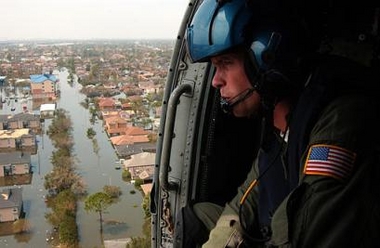
In this photo released by the U.S. Coast Guard, Petty Officer 2nd Class Shawn Beaty, 29, of Long Island, N.Y., looks for survivors in the wake of Hurricane Katrina from the door of a rescue helicopter over New Orleans. Tuesday, Aug. 30, 2005. Beaty is a member of an HH-60 Jayhawk helicopter rescue crew sent from Clearwater, Fla., to assist in search and rescue efforts (AP Photo/U.S. Coast Guard, Petty Officer 2nd Class NyxoLyno Cangemi)

📎 aaa
Đăng nhập để trả lời
0
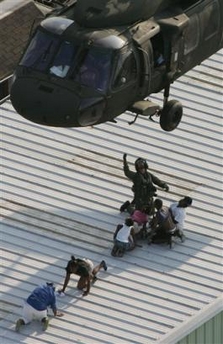
AP - Wed Aug 31, 8:24 PM ET New Orleans residents are rescued by helicopter from the floodwaters of Hurricane Katrina Wednesday, Aug. 31, 2005 in New Orleans. (AP Photo/David J. Phillip)

📎 ahel
Đăng nhập để trả lời
0
Reuters - Wed Aug 31, 8:23 PM ET

A view of the damaged roof of the New Orleans Superdome after Hurricane Katrina struck in Louisiana August 31, 2005. Authorities struggled on Wednesday to evacuate thousands of people from hurricane-battered New Orleans as food and water grew scarce and looters raided stores, while U.S. President George W. Bush said it would take years to recover from the devastation. REUTERS/Marc Serota Email Photo Print Photo

📎 anorl
Đăng nhập để trả lời
0
.


Please, link Katrina:
http://vnthuquan.net/diendan/tm.aspx?m=68699&mpage=1&key=&#68722

Thanks

>>>>>>>>>>>>>>>>

AP - Wed Aug 31, 8:37 PM

ET New Orleans residents wait to be rescued from the floodwaters of Hurricane Katrina Wednesday, Aug. 31, 2005 in New Orleans. (AP Photo/David J.

📎 ASA
Đăng nhập để trả lời
0
Death Toll in China Typhoon Rises to 42
By VOA News
03 September 2005


China has raised the death toll from Typhoon Talim to at least 42.

The storm brought heavy rain and winds of up to 125 kilometers per hour Friday. The rain triggered landslides in the eastern part of China's Zhejiang province. Several people are also missing.

In one incident, nine people were buried alive when a mudslide crushed their houses in the city of Wenzhou. A father and son were killed when their house collapsed in the province of Fujian.

In Taiwan, the storm killed at least two people and injured dozens.

Talim eventually weakened as it blew inland over China.

http://www.voanews.com/english/2005-09-03-voa13.cfm

>>>>>>>>>>>>>>>>>>>>

Typhoon -> hurricane:

Post #: 62
http://vnthuquan.net/diendan/tm.aspx?m=68699&mpage=5&key=&#69204
Đăng nhập để trả lời
0
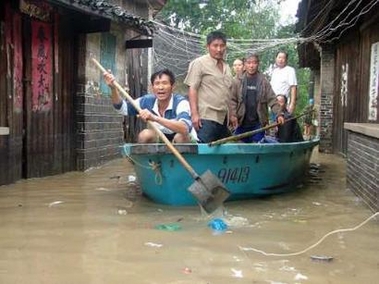
Reuters - Sun Sep 4, 8:25 AM ET Chinese residents evacuate on a boat in a flooded street in Hanshan county, east China's Anhui province, September 4, 2005. Torrential rains and landslides caused by Typhoon Talim have claimed 44 lives and left nine others missing in Anhui over the past four days, Xinhua News Agency reported on Sunday. CHINA OUT REUTERS/China Newsphoto

📎 ac
Đăng nhập để trả lời
0
Reuters - Sun Sep 4,11:16 AM ET
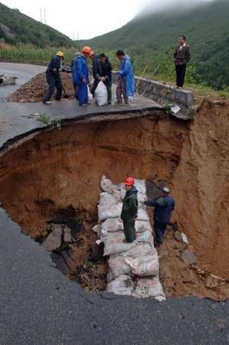
Chinese workers repair a section of No. 105 National Road damaged in landslides in Yuexi county, in east China's Anhui province, September 4, 2005. Torrential rains and landslides caused by typhoon Talim have claimed 53 lives and left 12 others missing in east China's Anhui province, provincial official sources said Sunday. CHINA OUT REUTERS/China Newsphoto

📎 ac
Đăng nhập để trả lời
0
Reuters - Sun Sep 4,11:27 AM
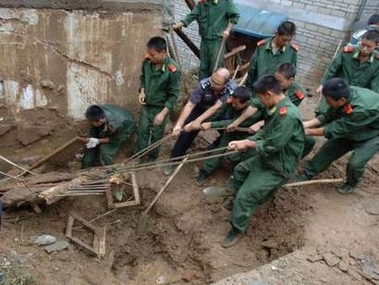
ET Chinese soldiers remove wreckage from a collapsed farmhouse in Yuexi county, in east China's Anhui province, September 4, 2005. Torrential rains and landslides caused by typhoon Talim have claimed 53 lives and left 12 others missing in east China's Anhui province, provincial official sources said Sunday. CHINA OUT REUTERS/China Newsphoto

📎 ar
Đăng nhập để trả lời
0
Reuters - Sun Sep 4, 5:59 AM ET
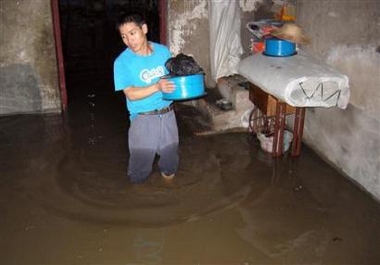
A Chinese villager moves his belongings out of his flooded house in Ezhou, central China's Hubei province September 3, 2005. Torrential rains and landslides caused by typhoon Talim have claimed 56 lives and left 29 others missing in China's over the past four days, state media reported. Picture taken September 3, 2005. CHINA OUT (China Newsphoto/Reuters)

📎 ac
Đăng nhập để trả lời
0
<Bài viết đã được chỉnh sửa lúc 2005-09-04 23:53:59HongYen>


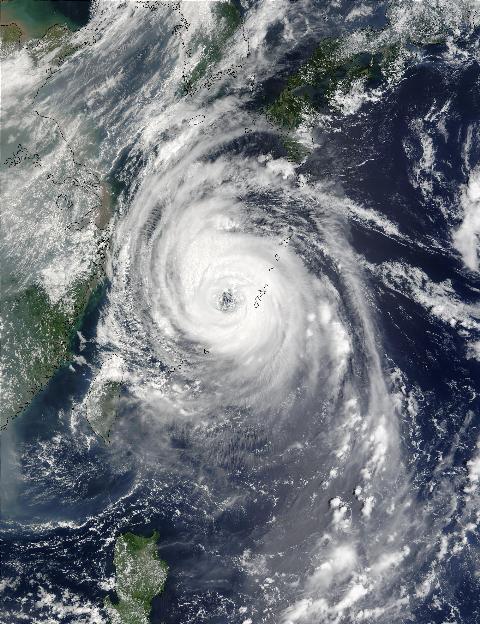
Typhoon Sinlaku (22w) off China

http://www.redtailcanyon.com/items/14836.aspx

📎 acs
Đăng nhập để trả lời
0
China Typhoon


📎 AAACt
Đăng nhập để trả lời
0
Typhoon Talim death toll at 72

From: Agence France-Presse From correspondents in Beijing
September 05, 2005

The death toll from Typhoon Talim rose to at least 72 in eastern China, with 29 people still missing according to the Xinhua state media.

Torrential rains and landslides claimed 53 lives and left 12 missing in Anhui province, Xinhua said.
Typhoon-inflicted disasters have affected about 5.21 million people in Anhui, forcing the relocation of more than 390,000 residents, according to the provincial production and disaster relief office.

Storm-related disasters also destroyed 33,600 houses and damaged more than 313,000 hectares of cropland in the province, causing 2.4 billion yuan ($A381.03 million) in direct losses, it said.

At Wenzhou city in Zhejiang province, 14 people were confirmed killed while nine were missing in a series of thunderstorms, landslides and cave-ins brought about by Talim, Xinhua said.

Five people were killed and eight are missing in the province of Jiangxi, where more than 7,000 houses were destroyed and 210,000 hectares of crops damaged.


Advertisement:
China reported days ago that floods had killed 1,024 people and left another 293 missing so far this year.


http://www.news.com.au/story/0,10117,16494435-1702,00.html
Đăng nhập để trả lời
0


Sunday, 4 September 2005, 08:22 GMT 09:22 UK

Dozens die as typhoon hits China

The storm sent flash floods surging through city streets
At least 54 people have died in China because of flooding and landslides triggered by Typhoon Talim.
About 40 died in the province of Anhui when Talim made landfall on Thursday, and 14 died in the city of Wenzhou, China's Xinhua news agency reported.

Some 400,000 people were affected by the storm, which caused an estimated $877m (£476m) worth of damage.

The weakening storm hit China on Thursday after killing two people and injuring dozens in Taiwan.

By Saturday Talim had weakened to a tropical storm as it moved further inland.

Homes damaged

More than 100,000 people had been evacuated from their homes in Anhui, with 400,000 people in the province affected by the storm.

Up to a million people were moved from low-lying coastal flood plains in Zhejiang and Fujian provinces, Xinhua said.


Animated guide: Typhoons


At least 23 people were listed as missing after heavy wind and rain flooded roads, knocked down power lines and set off landslides.

In one mountainous rural area, mudslides buried two buildings with 11 people still inside.

One died before rescue teams arrived, while five others were hurt.

Almost 12,000 homes were damaged in the south-eastern coastal city of Wenzhou, in Zhejiang province, Xinhua said.

Serious flooding throughout southern and eastern China this summer has killed more than 1,000 people and left hundreds missing, presumed dead.

Strong typhoons regularly hit Asian nations along the western edge of the Pacific Ocean throughout the summer months.

Typhoon Nabi, a separate storm heading towards Japan, weakened on Sunday to a category three typhoon. It was expected to weaken further before hitting the southern island of Kyushu.

http://news.bbc.co.uk/2/hi/asia-pacific/4212636.stm
Đăng nhập để trả lời
0
California Earthquake Could Be the Next Katrina

By Jia-Rui Chong and Hector Becerra Times Staff Writers
Thu Sep 8, 7:55 AM ET


U.S. Geological Survey seismologist Lucy Jones remembers attending an emergency training session in August 2001 with the Federal Emergency Management Agency that discussed the three most likely catastrophes to strike the United States.


First on the list was a terrorist attack in New York. Second was a super-strength hurricane hitting New Orleans. Third was a major earthquake on the San Andreas fault.

Now that the first two have come to pass, she and other earthquake experts are using the devastating aftermath of Hurricane Katrina as an opportunity to reassess how California would handle a major temblor.

Jones, scientist-in-charge for the geological survey's Southern California Earthquake Hazards Team, and other experts generally agree that California has come a long way in the last two decades in seismic safety.

In Los Angeles, all but one of 8,700 unreinforced masonry buildings — considered the most likely to collapse in a major quake — have been retrofitted or demolished. The state spent billions after the 1994 Northridge quake to retrofit more than 2,100 freeway overpasses, reporting this week that only a handful remain unreinforced.

Despite these improvements, however, officials believe that a major temblor could cause the level of destruction and disruption seen over the last week on the Gulf Coast.

More than 900 hospital buildings that state officials have identified as needing either retrofitting or total replacement have yet to receive them, and the state recently agreed to five-year extensions to hospitals that can't meet the 2008 deadline to make the fixes. More than 7,000 school buildings across the state would also be vulnerable during a huge temblor, a state study found, though there is no firm timetable for upgrading the structures.

And four Los Angeles Police Department facilities — including the Parker Center headquarters in downtown — worry officials, because they were built to primitive earthquake standards and might not survive a major temblor. Only two of the LAPD's 19 stations meet the most rigorous quake-safe rules.

"We could be dealing with infrastructure issues a lot like New Orleans," Jones said. "Our natural gas passes through the Cajon Pass…. Water — three pipelines — cross the San Andreas fault in an area that is expected to go in an earthquake." Railway lines are also vulnerable, she said.

A catastrophic temblor at the right spot along the San Andreas could significantly reduce energy and water supplies — at least temporarily, she and others said. Researchers at the Southern California Earthquake Center said there is an 80% to 90% chance that a temblor of 7.0 or greater magnitude will strike Southern California before 2024.

"We aren't anywhere close to where I wish we were" in terms of seismic safety, Jones said.

Seismologists are particularly concerned about a type of vulnerable building that has received far less attention than unreinforced masonry.

There are about 40,000 structures in California made from "non-ductile reinforced concrete," a rigid substance susceptible to cracking. This was a common construction ingredient for office buildings in the 1950s and '60s, before the state instituted stricter standards. Few such structures have been seismically retrofitted, officials said.

Seismic safety advocates have also recently lost some major battles in Sacramento. The state rejected a proposal from the Seismic Safety Commission in the wake of the 2003 San Simeon earthquake to force owners of unreinforced masonry buildings to post warning signs. In that quake, two women died when the roof slid off of a two-story Paso Robles brick building where they worked.

Last week, the Legislature sent to the governor's desk a bill that encourages local governments to develop retrofitting programs for "soft story" wood-frame apartment buildings.

There are an estimated 70,000 such structures in the state, and experts worry that they could sustain major quake damage, because they often have tuck-under parking and lack solid walls at their bases.

The danger of this kind of construction was illustrated in the 1994 collapse of the Northridge Meadows apartment complex, in which 16 residents were killed.

There are other potential safety gaps as well.

Although Los Angeles, Long Beach, Pasadena and several other cities have reinforced almost all their masonry buildings, about a third of such structures across the state remain unprotected, said Frank Turner, an engineer with the Seismic Safety Commission.

A state study published last year on hazard reduction paints a sobering picture of California's earthquake danger. About 62% of the population lives in a zone of high earthquake danger, including 100% of the population of Ventura County, 99% of Los Angeles County and 92% of Riverside County.

Since 1971, there have been at least 13 earthquakes of magnitude 6.0 or greater in the state, and research conducted after the 1989 Loma Prieta quake in the Bay Area found a 62% probability that at least one earthquake of magnitude 6.7 or more would strike the Bay Area before 2032.

"We're pretty confident we have some of the best buildings in the world here, but … there are always going to be losses, because these are extraordinary events," Turner said.

Still, Southern California's geography could help prevent a catastrophe on the scale of that in New Orleans.

Because the Los Angeles region is so much larger than the Louisiana city, it is difficult to conceive of a disaster — "short of an A-bomb" — that would blanket the whole city, let alone the whole county, in ruin, said Lee Sapaden, a spokesman for Los Angeles County's Office of Emergency Management.

Earthquakes tend to do the most damage closest to the epicenters. The 1994 Northridge quake, for example, damaged a large swath of the San Fernando Valley as well as parts of Hollywood and the Westside. But areas farther to the east and south, such as Long Beach and Orange County, saw little damage.

A large quake in the Valley would probably still allow emergency supplies and rescuers to reach the area from other locations such as the San Gabriel Valley and South Bay, Sapaden said.

Emergency crews would have better mobility than those in New Orleans, he added, because even if freeways were wrecked, aid would probably be able to get through the vast majority of areas on surface streets. "Here in Southern California, Riverside, San Bernardino, Orange and Santa Barbara counties would help us out, just like we would help them," he said.

One of the biggest concerns of seismic safety officials is the fate of hospitals.

The 1971 Sylmar earthquake pushed Olive View Medical Center a foot off its foundation, causing the first floor to collapse, killing three patients and a hospital worker. The 1994 Northridge quake knocked 23 hospitals temporarily out of service.

After that quake, the Legislature passed a law requiring that hospitals retrofit buildings to withstand a major temblor or replace them with new ones. About 78% of hospitals have at least one building deemed at risk, said Jan Emerson, spokeswoman for the California Hospital Assn.

But hospitals, many of which are fighting budget problems, have balked at the price tag — estimated at $24 billion for 2002-2030 — and in many cases have successfully pushed Sacramento to delay the retrofitting deadline. The state has already granted about 200 requests for extensions to make the necessary repairs by 2013, according to a state document.

Safety officials said more work is also needed at schools.

A 2002 state study found that more than 7,500 school buildings across California are expected to "perform poorly" in a major temblor.

The Los Angeles Unified School District has completed seismic upgrades to nearly 2,000 buildings, spending $222 million on the effort, according to Richard Luke, director of design for the district.

But the district has not finished upgrades on 600 portable buildings and will look at an additional 239 buildings identified by the Division of State Architect as possibly performing poorly during a major quake.

Jones of the geological survey and Turner of the Seismic Safety Commission believe that one worst-case scenario would involve a massive temblor on the San Andreas fault around where major utility lines run, possibly compromising water and power supplies.

"We should not be at all surprised if something similar to Hurricane Katrina mirrors itself in California," Turner said. "There have been lots of articles written about the failure of levees in the [Sacramento-San Joaquin] Delta, the loss of drinking water in California. This is just the tip of the iceberg."

About 60% of Southern California's water is imported from outside the region in three major aqueducts that cross the San Andreas fault, making them particularly vulnerable to major earthquake damage.

One branch of the 444-mile California Aqueduct, which carries water from the delta, virtually sits on top of the fault for a few miles near Palmdale. A second aqueduct from the Colorado River crosses the fault near Beaumont. And the Los Angeles Aqueduct, which transports snowmelt from the eastern Sierra, runs across the San Andreas in a mountain tunnel between Lancaster and Santa Clarita.

Southern California water managers say they've made progress in recent years building local reserves they could turn to if they lost water from one or more of the transport systems.

With such efforts, "we feel even more confident we are able to provide sufficient water to sustain us during an earthquake," said Debra Man, chief operating officer of the Metropolitan Water District of Southern California, the region's main water wholesaler.

Jim McDaniels, chief operating officer for the Los Angeles Department of Water and Power's water system, said that if disaster struck, the DWP could double its groundwater pumping within the basin and draw from its four big local reservoirs.

Major gas lines also come into Southern California over the San Andreas at several points, including at Indio, Palmdale, the Cajon Pass and the Tejon Ranch. Still, officials at the Southern California Gas Co. expressed confidence that the system could withstand a strong earthquake, noting they have been upgrading the pipeline for years.

Another open question is whether the major quake would cause damage to fire stations, police headquarters and facilities of other emergency agencies, possibly slowing their response. A state study found that many of the 1,300 emergency operations buildings were constructed before strict quake building standards were enacted in 1986, and that only a portion of those had been retrofitted.

At the LAPD, the only four facilities to meet the most recent and rigorous "essential building" standards are the department's newest: the West Valley and Mission police stations and two 911 dispatch centers.

Yvette Sanchez-Owens, head of the department's facilities management office, said she is most concerned about three stations built in the 1960s: Rampart, Hollenbeck and Harbor. Police officers at the Harbor station in San Pedro have been relocated to trailers while a new station is built; officers could be moved out of the Hollenbeck station in Boyle Heights sometime this fall as preparation for construction of a new station begins.

As for Parker Center, it already sustained significant damage during the Northridge earthquake. It is also scheduled to be replaced, but not for several years.

"It could be in real trouble," Sanchez-Owens said. "It's definitely not built up to standard."

Times staff writer Bettina Boxall contributed to this report.


http://news.yahoo.com/s/latimests/20050908/ts_latimes/californiaearthquakecouldbethenextkatrina
Đăng nhập để trả lời
0

Hurricane Stan makes landfall in Mexico
Đăng nhập để trả lời
0
October 04, 2005

Hurricane Stan makes landfall in Mexico


Hurricane Stan is making landfall southeast of Veracruz, Mexico, with winds of 80 mph.

Forecasters say coastal storm surge flooding of 2 to 4 feet above normal tide levels, along with large and dangerous battering waves, can be expected near and to the north of the landfall location, according to the 11 a.m. advisory.

Stan is expected to produce 5 to 10 inches of rainfall over portions of southeastern Mexico. Rainfall of 10 to 15 inches, with isolated maximum amounts of 20 inches, is possible over the mountainous terrain in the states of Veracruz and Puebla. These rains could cause life-threatening flash floods and mud slides.

http://www.sun-sentinel.com/news/weather/weblog/hurricane/
Đăng nhập để trả lời
0
Hurricane Stan strikes Mexico, 51 dead in Centam
By Frank Jack Daniel
2 hours, 28 minutes ago


VERACRUZ, Mexico (Reuters) - Hurricane Stan smacked into Mexico's Gulf coast on Tuesday, forcing evacuations and shutting down oil ports after killing at least 51 people in Central America.

The storm came ashore 85 miles southeast of the city of Veracruz as a Category One hurricane with winds of nearly 80 mph (128 kph), although it then weakened to a tropical storm.

"The weather is terrible, it's raining and windy. Some of the trees are falling down," hotel worker Nabor Sandoval said from Veracruz, a normally balmy, laid-back colonial port.

Hundreds of people were evacuated in Veracruz as rivers overflowed into residential areas, the city government said.

Four people were injured in Veracruz state when the roofs of their homes were blown off.

"There are no deaths but things are difficult. It is too much water," said a spokeswoman for the state civil protection agency.

Stan crossed the Yucatan Peninsula during the weekend, unleashing heavy rains in Central America, where at least 51 people were killed in floods, mudslides and rough weather at sea.

El Salvador was hardest hit with at least 39 deaths, while the toll in Nicaragua was six. Four people were reported dead in Guatemala and two in Honduras.

SALVADOR TRAGEDY

Rescue workers on Tuesday pulled a dead 15-day-old baby from under a mudslide that crashed into a house in San Salvador, and carried it away wrapped in a Red Cross T-shirt. Six members of the same family died buried in the mud.

Stan headed across mountains in the Mexican states of Veracruz and Puebla, threatening to dump as much as 20 inches

of rain in isolated cases.

"These rains could cause life-threatening flash floods and mud slides," the U.S. Hurricane Center in Miami said. The storm also threatened Oaxaca, one of Mexico's poorest states where many homes are made of flimsy building materials.

Mexico closed Dos Bocas, Cayo Arcos and Coatzacoalcos, Mexico's main oil exporting ports, but it was unclear if deliveries would be affected.

State oil monopoly Pemex evacuated 270 workers from five oil exploration platforms in the Gulf of Mexico ahead of Stan's arrival.

Mexico's civil protection agency said it was considering evacuating thousands of people in the state of Veracruz.

Rains from Stan reached Mexico City, more than 250 miles

away.

Coffee is grown in Veracruz's hilly inland region but there was no immediate word on possible crop damage.

(Additional reporting by Miguel Angel Gutierrez and Alistair Bell in Mexico City and Alberto Barrera in San Salvador)

http://news.yahoo.com/news?tmpl=story&u=/nm/20051004/us_nm/weather_stan_dc_4
Đăng nhập để trả lời
0
Hurricane Stan strikes Mexico, 65 dead in Centam

By Frank Jack Daniel
6 minutes ago


VERACRUZ, Mexico (Reuters) - Hurricane Stan smacked into Mexico's Gulf coast on Tuesday, forcing evacuations and shutting down oil ports after killing at least 65 people in Central America.

The storm came ashore 85 miles southeast of the city of Veracruz as a Category One hurricane with winds of nearly 80 mph, although it then weakened to a tropical storm.

Small groups of Mexican Navy sailors were among the few who ventured onto the darkened streets of downtown Veracruz, a colonial port city, in lashing rain and high winds that snapped branches from palm trees.

Fishing launches hauled out of the sea ahead of Stan's arrival lined the shorefront, parked like cars. Rainwater poured off the balconies of Spanish colonial buildings.

Gusts blew the roofs off poor residents' flimsy shacks, injuring four people in the state of Veracruz, and hundreds were evacuated when rivers overflowed.

Veracruz resident Juan Alvarado, 52, feared for his wood and tin home. "I am worried the wind will take it away. My three children are there," he said.

"There are no deaths but things are difficult. It is too much water," said a spokeswoman for the state civil protection agency.

Rain lashed a shantytown on the outskirts of Veracruz, where residents watched the water swell from a lagoon into neighbors' homes, and debated whether to flee to shelters.

"If it rises any more we'll have to go," said Carolina Cagaltoto, a 25 year-old mother of two. "But I don't want to go because (people) are stealing."

In the mountainous southern state of Chiapas, close to 5,000 people fled to high ground as raging rivers overflowed into town streets, sweeping away buildings and cars.

Stan crossed the Yucatan Peninsula during the weekend, unleashing heavy rains in Central America, where at least 65 people were killed in floods, mudslides and rough weather at sea.

SALVADOR TRAGEDY

El Salvador was hardest hit with at least 49 deaths, while the toll in Nicaragua was six. Eight people were reported dead in Guatemala and two in Honduras.

Rescue workers pulled a dead 15-day-old baby from under a mudslide that crashed into a house in San Salvador, and carried it away wrapped in a Red Cross T-shirt. Six members of the same family died buried in the mud.

Mexico closed its main oil exporting ports -- Dos Bocas, Cayo Arcos and Coatzacoalcos -- but it was unclear if deliveries would be affected.

State oil monopoly Pemex evacuated 270 workers from five oil exploration platforms in the Gulf of Mexico ahead of Stan's arrival.

Rains from Stan reached Mexico City, more than 250 miles

away.

Coffee is grown in Veracruz's hilly inland region but there was no immediate word on possible crop damage.

(Additional reporting by Miguel Angel Gutierrez and Alistair Bell in Mexico City and Alberto Barrera in San Salvador)

http://news.yahoo.com/news?tmpl=story&u=/nm/20051005/wl_nm/weather_stan_dc_11
Đăng nhập để trả lời
0
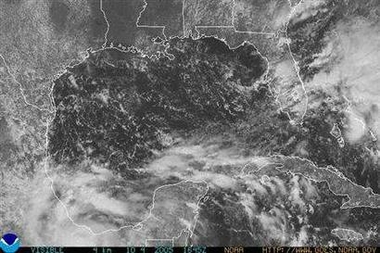
Reuters - Tue Oct 4, 6:49 PM ET A National Oceanic and Atmospheric Administration (NOAA) satellite image shows the Gulf of Mexico on October 4 2005. REUTERS/NOAA

📎 avinh
Đăng nhập để trả lời
0
Thursday, 6 October 2005, 01:58 GMT 02:58 UK

Rescuers struggle in wake of Stan

Officials said El Salvador was unable to cope with the emergency
A rescue operation is under way in Central America and southern Mexico, where mudslides caused by a tropical storm have killed at least 120 people.
The emergency services are continuing to find buried bodies as they reach more isolated villages.

Although Tropical Storm Stan has passed, heavy rain is still falling and river levels are dangerously high.

The worst affected countries, El Salvador and Guatemala, are struggling to evacuate everyone at risk.

Shelters in both countries are holding thousands of people, while road links have been cut off.

"The emergency is bigger than the rescue capacity, we have floods everywhere, bridges about to collapse, landslides and dozens of roads blocked by mudslides," a spokesman for the Salvadoran Red Cross said.

In Mexico, reports are now coming in that dozens of people are missing.

President Vicente Fox has told the emergency services to concentrate on saving lives.

Ill-defended

Mountain villages and urban shanty towns were ill-defended against the tide of water and mud.

Alexander Flores said his home on the edge of San Salvador was buried under 6ft (2 metres) of dirt and rocks.

"I just heard two shouts from my mother, saying 'Alex, Alex', maybe for me to help her or her trying to save me," he told Reuters.


His mother and five of his siblings - including a new-born baby - died, he said.


Thousands of Salvadorans have fled their homes to seek shelter, not just from Stan but also from the Ilamatepec volcano, which killed two people when it erupted on Saturday.

Authorities warned of another possible eruption on Wednesday and widened the exclusion zone around the volcano from 4km to 5km (about three miles).

Stan briefly reached Category One hurricane strength, slamming into Mexico on Tuesday with winds of 130km/h (80mph), before fading quickly.

However, heavy rains have fallen solidly over some areas for four days.

"The river is huge, people have lost their things. It rained all night and it's still raining," said coffee salesman Lucas Lopez in Tapachula, in Mexico's Chiapas state.

The death toll on Wednesday was put at 50 in El Salvador, 50 in Guatemala, and at least 17 across Mexico, Nicaragua and Honduras.

Đăng nhập để trả lời
0

Typhoon LongWang, September 28, 2005


http://earthobservatory.nasa.gov/NaturalHazards/natural_hazards_v2.php3?img_id=13169
Đăng nhập để trả lời
0
Typhoon Batters Taiwan; 1 Dead, 1 Missing, 46 Hurt

By VOA News
02 October 2005


A vehicle lies wedged between two parked cars Sunday morning


Typhoon Longwang is swirling toward mainland China after pounding Taiwan Sunday, leaving one person dead, one missing, and 46 injured while disrupting flights and downing power lines.


Officials say a 60-year-old man died after he was hit by flying debris. A woman is missing and feared dead after being washed away by flash floods in the central town of Hoping.

Authorities say most of the injuries were caused by flying debris.

Taiwan's Central Weather Bureau said the typhoon made landfall early Sunday and left in the afternoon.

The foreign ministry says the storm interrupted Taiwan President Chen Shui-bian's flight home from a two-week trip abroad. Officials said he landed on the Indonesian island of Bali Sunday rather than fly to Taiwan. The ministry says the president will stay in Bali until the weather clears in Taiwan.

Some information for this report provided by AP and Reuters.

http://www.voanews.com/english/2005-10-02-voa9.cfm
Đăng nhập để trả lời
0
Death toll from hurricane Stan rises to 160 in Guatemala


MEXICO CITY, 10/08 - Death toll from hurricane Stan has reached 160 in Guatemala after rescuers retrieved 61 bodies from two mudslide-hit communities, Guatemala`s disaster reduction body said Friday in Guatemala City.

A spokesman for the Guatemalan National Disaster Reduction Coordination said in the capital that the toll was feared to rise in the coming hours.

On Wednesday a mudslide buried the Panabaj and Panchay communities in the Santiago Atitlan municipality, some 190 km west of the capital.

Rescuers have retrieved 61 corpses from the debris within the past 36 hours, while 800 more are feared to be under the mud.

One of the survivors, Manuel Ramirez, told the press that the 1,500 houses of the region completely disappeared in the disaster.

All together, more than 200 people have been killed in southern Mexico and Central America in floods and mudslides caused by hurricane Stan.

This year`s Atlantic hurricane season, which runs from June 1 to Nov. 30, has been one of the deadliest on record, with the notorious hurricane Katrina killing over 1,212 people in the US Gulf Coast and displacing millions more not long ago.

http://www.angolapress-angop.ao/noticia-e.asp?ID=381346
Đăng nhập để trả lời
0
Guatemala: Landslide Areas Mass Graveyards


By MARK STEVENSON, Associated Press Writer
54 minutes ago

GUATEMALA CITY - Dozens of foreign tourists fled devastated lakeside Mayan towns on foot and by helicopter Sunday as Guatemalan officials said they would abandon communities buried by landslides and declare them mass graveyards.

Villagers who had swarmed over the vast mudslides with shovels and axes digging for hundreds of missing gave up the effort Sunday, five days after Hurricane Stan made landfall on the Gulf of Mexico coast, bringing torrential rains before weakening to a tropical depression.

More than 640 people died and hundreds more were missing across Central America and southern Mexico after a week of rains. In hardest-hit Guatemala, 519 bodies had been recovered and reburied. Some 338 were listed as missing.

"Panabaj will no longer exist," said Mayor Diego Esquina, referring to the Mayan lakeside hamlet in Guatemala covered by a half-mile-wide mudflow as much as 15 to 20 feet deep. "We are asking that it be declared a cemetery. We are tired. We no longer know where to dig."

Esquina said bodies were now so rotted that identification was impossible. He said about 250 people were missing in Panabaj. Only 77 bodies were recovered, he said.

Promised dogs trained to detect bodies failed to arrive in time, and "we don't even know where to dig anymore," Esquina said.

Vice President Eduardo Stein said steps were being taken to give towns "legal permission to declare the buried areas" as hallowed ground.

Attention turned to aiding thousands of hungry or injured survivors as helicopters — including U.S. Blackhawks and Chinooks — fanned out across Guatemala to evacuate the wounded and bring supplies to more than 100 communities still cut off by mudslides and flooding.

As some foreign tourists worked shoulder to shoulder with Mayans in traditional cotton blouses and broad sashes to dig for missing victims, others hiked around mud-choked roads or boarded government helicopters in the second day of evacuations from the area around Lake Atitlan.

Helicopters went to the nearby town of San Andres Senetabaj to fly out an estimated 20 Scandinavians trapped since mudslides cut off the area several days ago. About 50 more tourists were hiking out of the lakeside town of Panajachel.

"We got about 400 (tourists) out last night, and were expecting more today," said Solomon Reyes of Guatemala's Tourism Ministry.

In some areas the arrival of the Guatemalan military only complicated matters. Villagers in Panabaj refused to allow in the army because of memories of a 1990 massacre there during the country's 36-year civil war.

But U.S. military helicopters from Joint Task Force Bravo based at Soto Cano Air Base in Honduras joined the rescue efforts with a half-dozen Blackhawk helicopters and one Chinook transport helicopter, running flights through dense clouds and heavy fog.

"We're still in search-and-rescue mode," said Army Maj. Bob Schmidt. "We're in the saving life and limb thought process."

The U.S. craft delivered some medical supplies and personnel and evacuated children needing medical care.

In El Salvador, authorities reported 71 deaths from the rains, after two people where swept away by flood waters in San Salvador on Saturday.

The rest of the dead were scattered throughout Nicaragua, Honduras, Costa Rica and southern Mexico.

Mexican President Vicente Fox visited devastated Chiapas state Sunday as floodwaters began to recede.

"The important thing is that the worst is over," Fox said. "Now comes the reconstruction."

http://news.yahoo.com/s/ap/20051009/ap_on_re_la_am_ca/central_america_flooding
Đăng nhập để trả lời
0
AP - Sat Oct 8, 4:10 PM ET
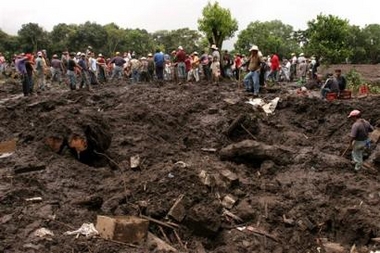
Villagers and rescue workers work in a mudslide area in Panabaj, Santiago Atitlan, Guatemala, 110 miles (180 kms) south of Guatemala City , Saturday, Oct 8, 2005. The landslide that buried several communities near the popular tourist destination of Lake Atitlan was believed to be the worst single disaster in several days of flooding that killed at least 277 people in southern Mexico and Central America. (AP Photo/Rodrigo Abd)

📎 amass
Đăng nhập để trả lời
0
«« « 3 4 5 6 7 » »»